However, the more complex the setup, the greater the challenge for the higher-level automation control system. After all, it must coordinate orders in real time, prioritize them intelligently, and provide transparency across all warehouse areas.
This is exactly where PROLAG World comes in. As a warehouse management system with an integrated automation framework and material flow controller, it brings automated and manual warehouse areas together on a central platform. The goal is to increase equipment availability, reduce throughput times, and maintain stable operations even during peak loads.
Key takeaways at a glance:
|

The more automation systems interact, the more important cross-system control becomes.
|

Intelligent warehouse strategies, transparency, and material flow control improve throughput and equipment availability, even in complex environments.
|
|

High integration capabilities are essential for connecting existing systems and enabling scalability for future expansions.
|

PROLAG World integrates different automation and warehouse systems from multiple manufacturers into a central WMS environment.
|
Centralized control for heterogeneous automation systems
PROLAG World is a modular warehouse management system that combines automated and manual warehouse areas in one central system. Its integrated automation framework enables a wide range of warehouse and conveyor systems from different manufacturers to be connected, monitored, and controlled.
Whether it is an automated small parts warehouse, pallet warehouse, tray warehouse, or AutoStore, PROLAG World acts as the conductor of intralogistics automation, coordinating all material flows in real time.
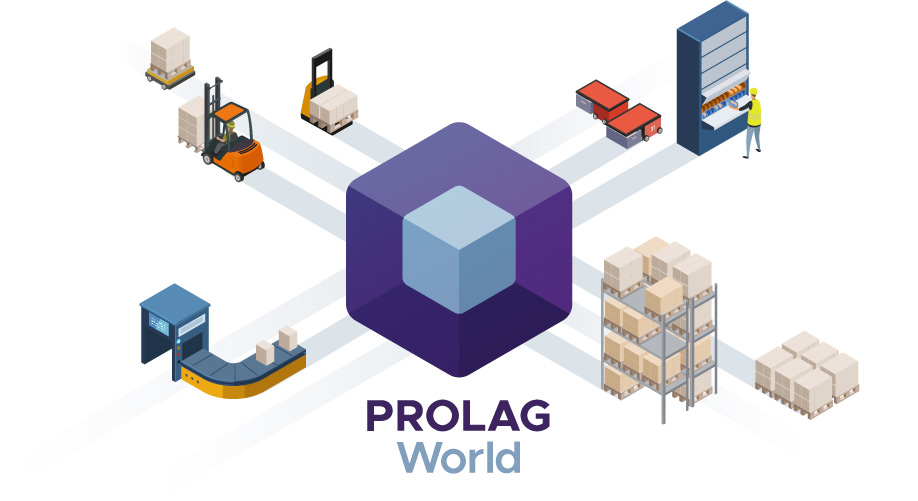
The key objectives are::
- End-to-end process control across all automated and manual warehouse areas
- Real-time orchestration of material flows and transport orders
- Vendor-independent integration through standardized interfaces
- Stable operations even in the event of disruptions and changing priorities
The material flow controller is at the heart of the automation control system. It independently manages each automated warehouse area, detects disruptions, processes status messages, and intelligently prioritizes goods movements. This helps prevent congestion, reduce throughput times, and increase equipment availability.
Intelligent coordination of automated warehouses: Warehouse strategies for greater efficiency
PROLAG Automation supports complex automation functions such as double-deep storage, multiple-deep load handling equipment, and automatic reorganizations. Blocked storage aids are automatically freed up through system-generated relocation processes. When needed, the system reorganizes warehouse areas to minimize retrieval times—for example, ahead of seasonal peaks or during high-load periods.
Additional efficiency in intralogistics automation comes from combining batch management, double cycles, and intelligent prioritization. Putaway and retrieval operations can be combined into a single trip, saving time and energy while increasing the overall performance of the automation system.
Because PROLAG World is also available as a cloud-based WMS, no new hardware investments are required for intralogistics automation.
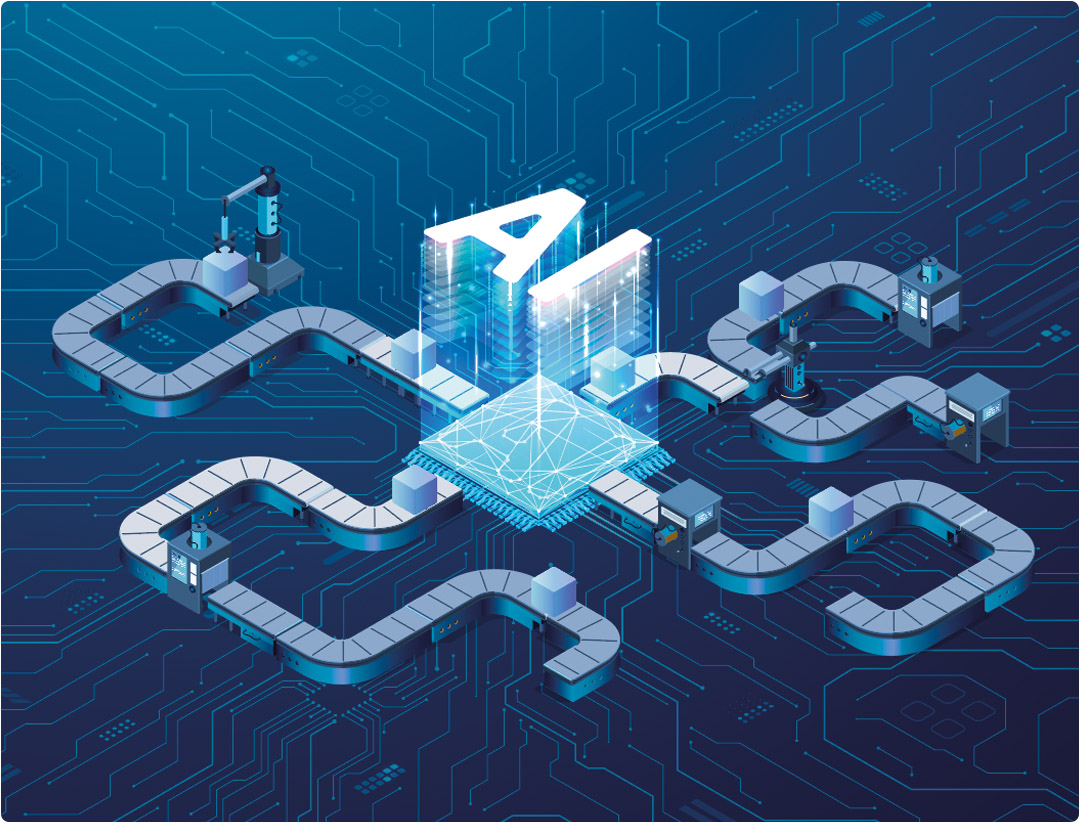
AI in automation control: Where does intralogistics stand today?
In intralogistics, AI currently supports warehouse operations primarily by prioritizing orders, detecting patterns in disruptions at an early stage, and forecasting developments. A sufficient data foundation and a system architecture capable of transferring these insights into operational processes are essential.
To explore additional applications of AI in intralogistics automation, CIM has launched its own research projects in cooperation with the Technical University of Munich and the Fraunhofer Institute.
Transparency and safety in automated warehouses
The more complex intralogistics automation becomes, the more essential a transparent overview of the current system status is. PROLAG World provides a digital twin that replicates automated warehouse structures on a one-to-one basis.
This enables simulations and testing of software updates, allowing new components to be introduced without risk. Analyzing bottlenecks, disruptions, or changing requirements at an early stage does not require intervention in ongoing operations.
Additional functions such as NIO processes (nonconforming items), buffer location management, and field load monitoring provide greater safety and reduce unplanned downtime. Employees can be notified specifically, defective pallets are automatically diverted, and conveyor systems are protected against overloading.
Flexible integration of AGVs, cranes, and specialized equipment
Warehouse automation today is no longer limited to conveyor systems and traditional automated warehouses. In addition to conventional conveyor technology, automated guided vehicles, cranes, and scales can also be seamlessly integrated into PROLAG World. Through standardized interfaces, the WMS communicates directly with these systems, assigns transport orders, and processes feedback. This creates flexible material flows—ideal for dynamic warehouse and production environments.
PROLAG World combines automated and manual warehouse areas on a central platform to enable smooth intralogistics automation. With intelligent control logic, real-time transparency, and high integration capabilities, the WMS becomes a key optimization factor in modern intralogistics. The result: greater efficiency, increased scalability, and a warehouse built for the future.
Modernization or new construction—from an existing warehouse to automated intralogistics
When it comes to intralogistics automation, companies typically face one of two starting points: Either an existing warehouse needs to be modernized, or a new warehouse offers the opportunity to incorporate automation into the overall concept from the outset.
Companies seeking to automate an existing warehouse generally work with established IT structures. Different warehouse areas, existing technology, and well-established processes must be taken into account and further developed in a meaningful way. To preserve existing investments, an open integration architecture is particularly important in this scenario.
With a new warehouse, logistics automation can be planned holistically from the very beginning. However, the question of how flexibly the selected system architecture can respond to future expansions remains important. Requirements, volumes, and technologies are constantly changing.
Both scenarios show that there is no universally correct level of automation. Nor is the goal to automate as many processes as possible. Instead, each intralogistics automation project is unique, and the key is to integrate the technology in a way that supports the company's business model and development over the long term.
If you also take your company's specific requirements into account when selecting a WMS, projects of any size and complexity can be implemented efficiently and with a long-term perspective—for example, the centralized airport logistics operation of Eurotrade Flughafen München Handels-GmbH.
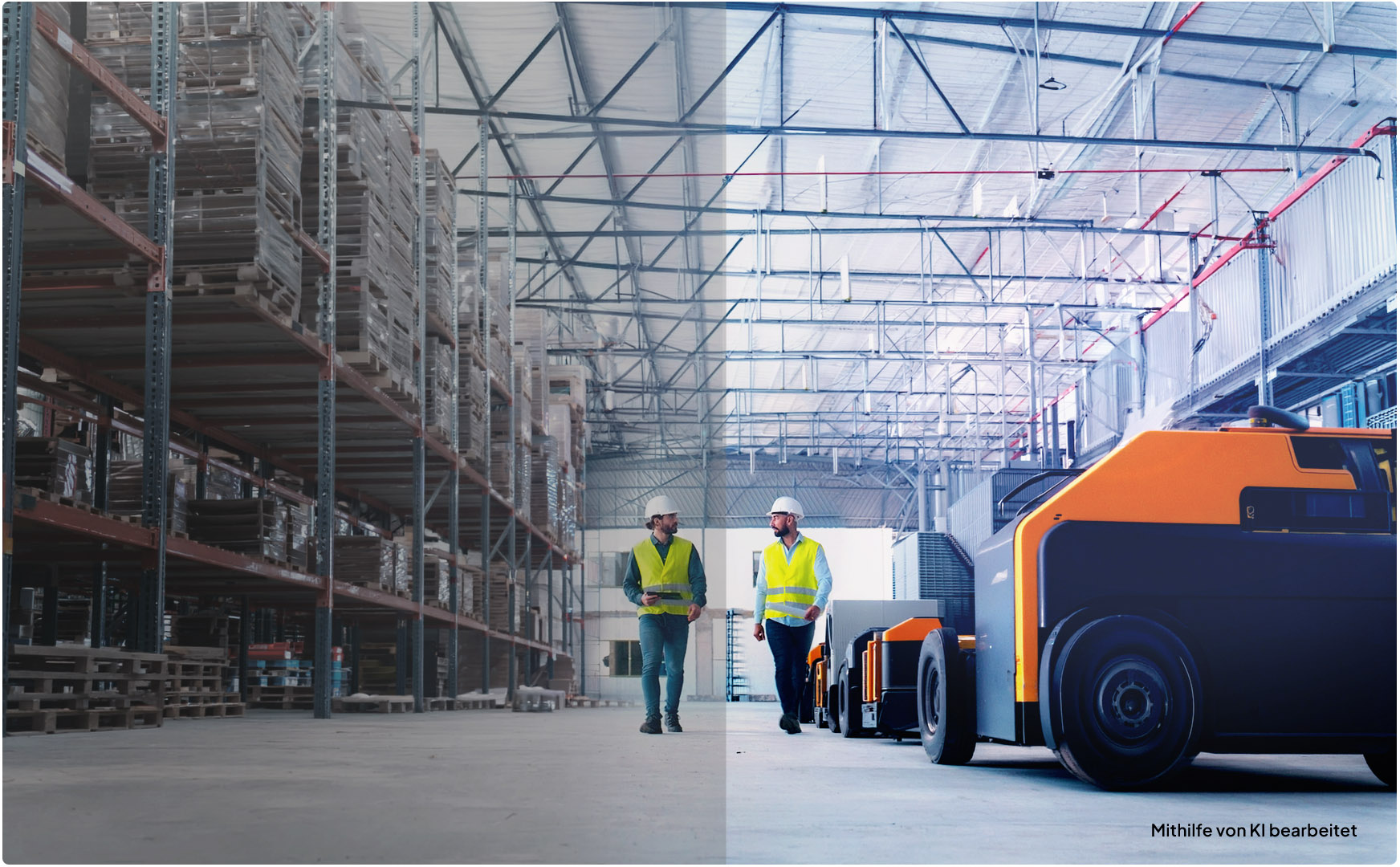
In intralogistics automation, technology is only as effective as the way its components work together
Individual systems may be highly capable, but intralogistics automation can only realize its full efficiency potential when all components work together in a coordinated manner. The more automated areas a warehouse has, the greater the requirements for integration, transparency, and higher-level control.
PROLAG World provides a central layer that connects automated and manual warehouse areas and coordinates material flows across systems. This allows companies to expand heterogeneous structures step by step without having to completely rebuild the overall setup.
Are you planning to automate intralogistics in your existing warehouse, or would you like to establish a centralized control architecture in your new facility from the outset? Contact our team of experts to learn more about the possibilities with PROLAG World. We look forward to hearing from you!
FAQ—Frequently asked questions
What does intralogistics automation mean?
Intralogistics automation means that technology and software take over all or part of the control of internal material flows. Examples include automated warehouses, conveyor systems, automated guided vehicles (AGVs), and automated order-picking systems.
Which systems can be connected to PROLAG World?
PROLAG World is not limited to specific manufacturers or automation systems. Standardized interfaces allow different systems to be connected—from automated small parts warehouses and pallet and tray warehouses to AutoStore, conveyor systems, automated guided vehicles, cranes, and specialized equipment.
How long does it take to connect an automated warehouse to a WMS?
There is no universal answer. Factors include the existing system landscape, available interfaces, the complexity of the automated warehouse, and the desired range of functions. However, a standardized integration architecture can reduce implementation effort.
Is automation worthwhile for smaller warehouses?
Whether warehouse logistics automation is worthwhile depends not only on warehouse size. The key factors are which processes are to be automated and how complex the warehouse structures are. For less complex requirements, starting with PROLAG One may be a suitable option: With standardized processes, the WMS increases efficiency in a short time.